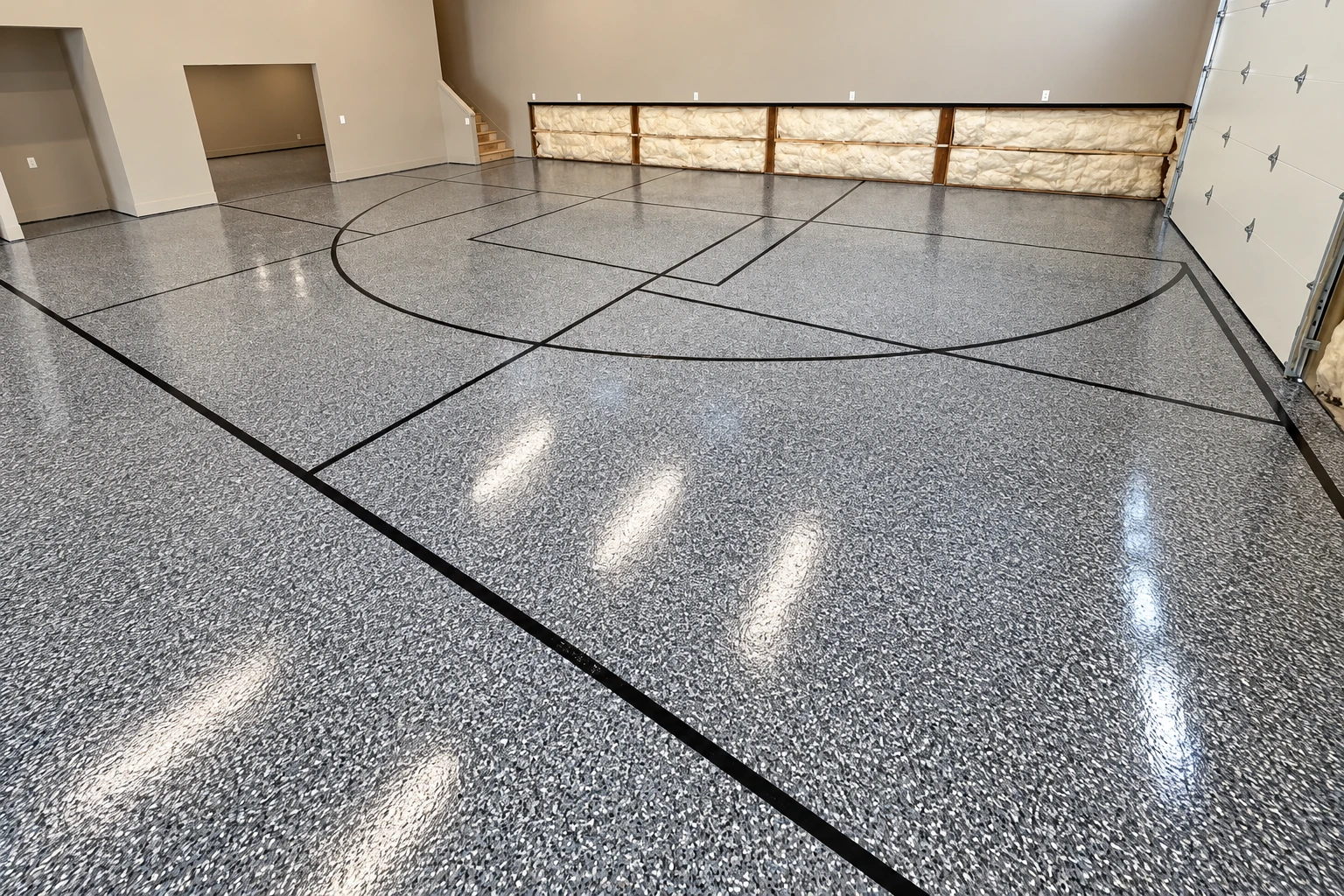
Most calls start after the old carpet or tile comes up and the slab underneath shows dips, humps, glue lines and patched spots. New flooring follows every one of them, so a long plank rocks or a tile cracks over a low place. The mix flows out like water finding its level in a stock tank, filling the low spots and settling into one even plane.
The price depends on the size of the room, how deep the low spots run, and how much prep comes first, such as stripping old coatings or glue, filling cracks or replacing damaged wood. The schedule depends mostly on that prep and on how dry the slab is, more than on the pour itself. The in-person estimate gives you the figure for your floor.