

Epoxy Floor Coatings
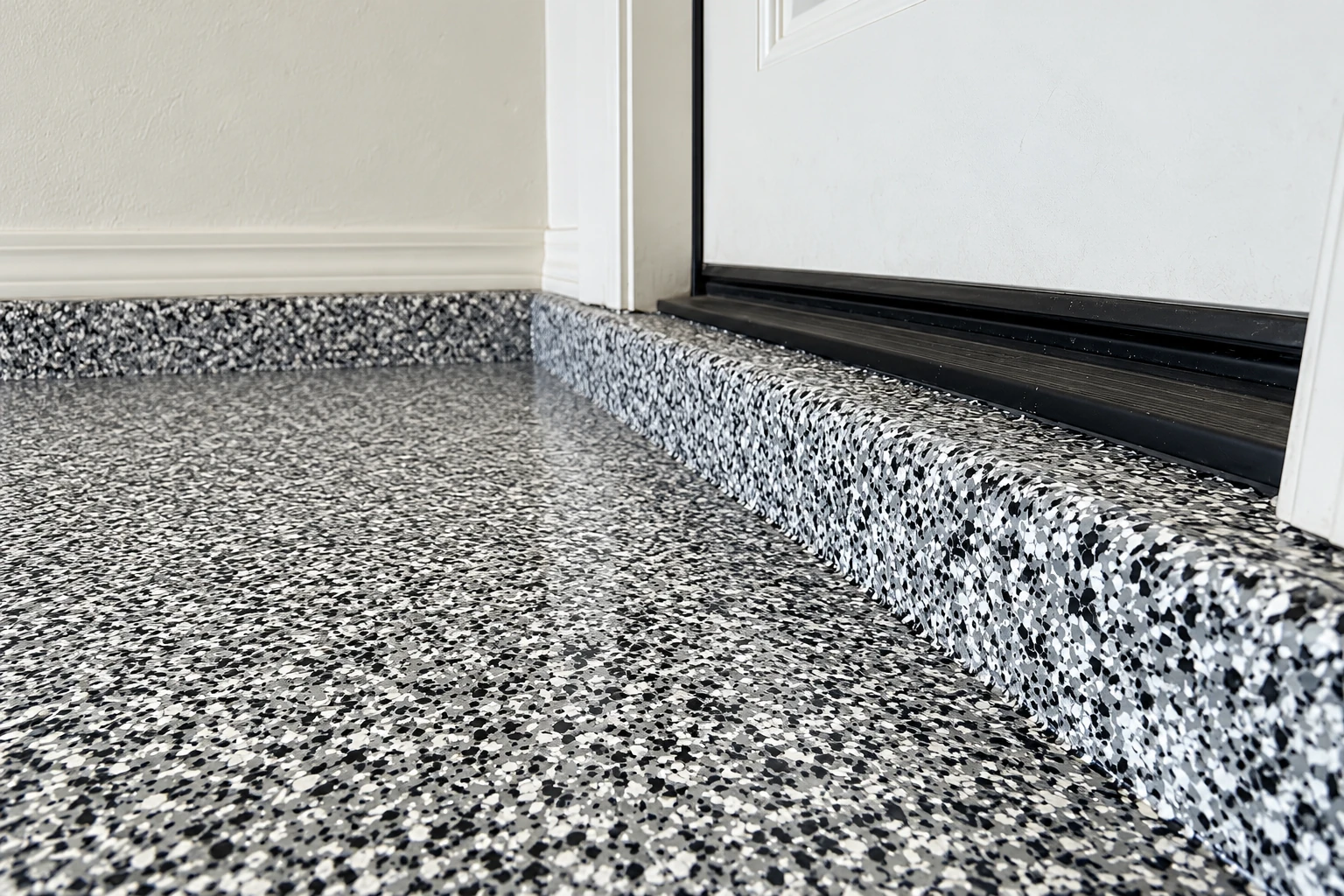
A good fit for a home garage or workroom slab that's dusty or stained, once we've ground it clean so the epoxy has open concrete to grip.
Slabworks Epoxy Floors of Waxahachie is a flooring contractor based in Waxahachie, TX. We grind, repair and coat garage, patio, basement and pool deck slabs, and put down hard-working floors for local shops and kitchens.
Slabworks Epoxy Floors of Waxahachie puts down epoxy, polyaspartic, polished, stained and overlay floors across Waxahachie, from home garages and basements to patios, pool decks, shops and commercial kitchens. Most jobs start the same way. I look at the slab with you, show you what's going on with it, and then we talk about which finish fits.
Waxahachie is home base, so a lot of our calls come from right here. Homeowners usually call about a garage floor that's stained, dusty or peeling from an old paint job, or a patio or pool deck that's worn rough. Shop and kitchen owners call because their floor takes a beating every day and the last coating didn't hold.
I learned concrete pouring and patching barn floors on our family farm, and the lesson carried over. A coating is a lot like a part on a tractor. It only holds as well as what it's bolted to, so we grind, test and repair the slab before anything goes on it, because most failures I've seen started under the coating.
We do this same work in the cities around Waxahachie too, including DeSoto and Midlothian. The slabs there run much like the ones here, mostly attached garages, back patios and pool decks on family homes, plus a steady stream of shops and small commercial kitchens that need a floor built for daily work.
A good fit for a home garage or workroom slab that's dusty or stained, once we've ground it clean so the epoxy has open concrete to grip.
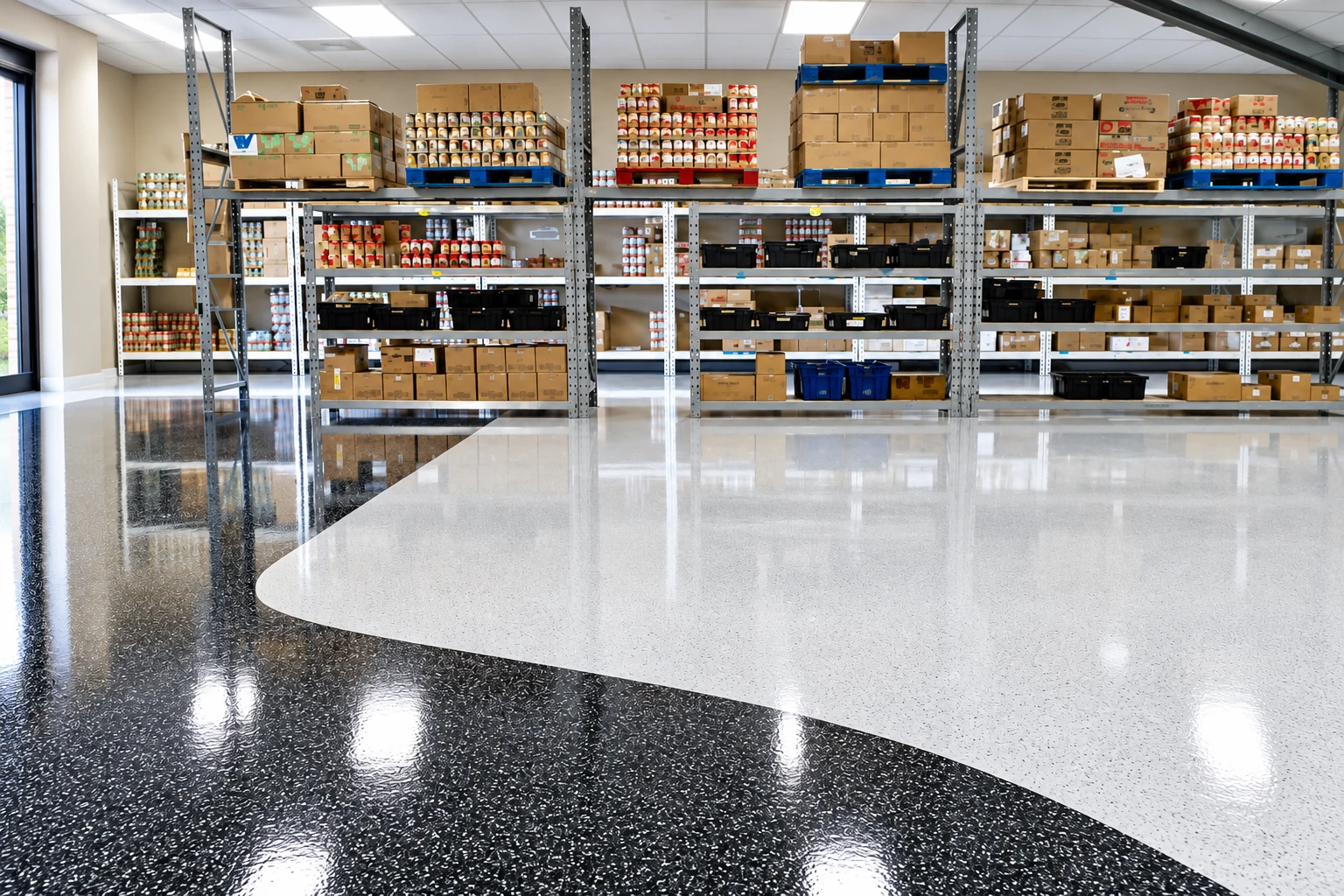
For shops, warehouses and work bays where carts, forklifts and spills hit the floor every day, we build heavier epoxy systems meant to take that traffic.
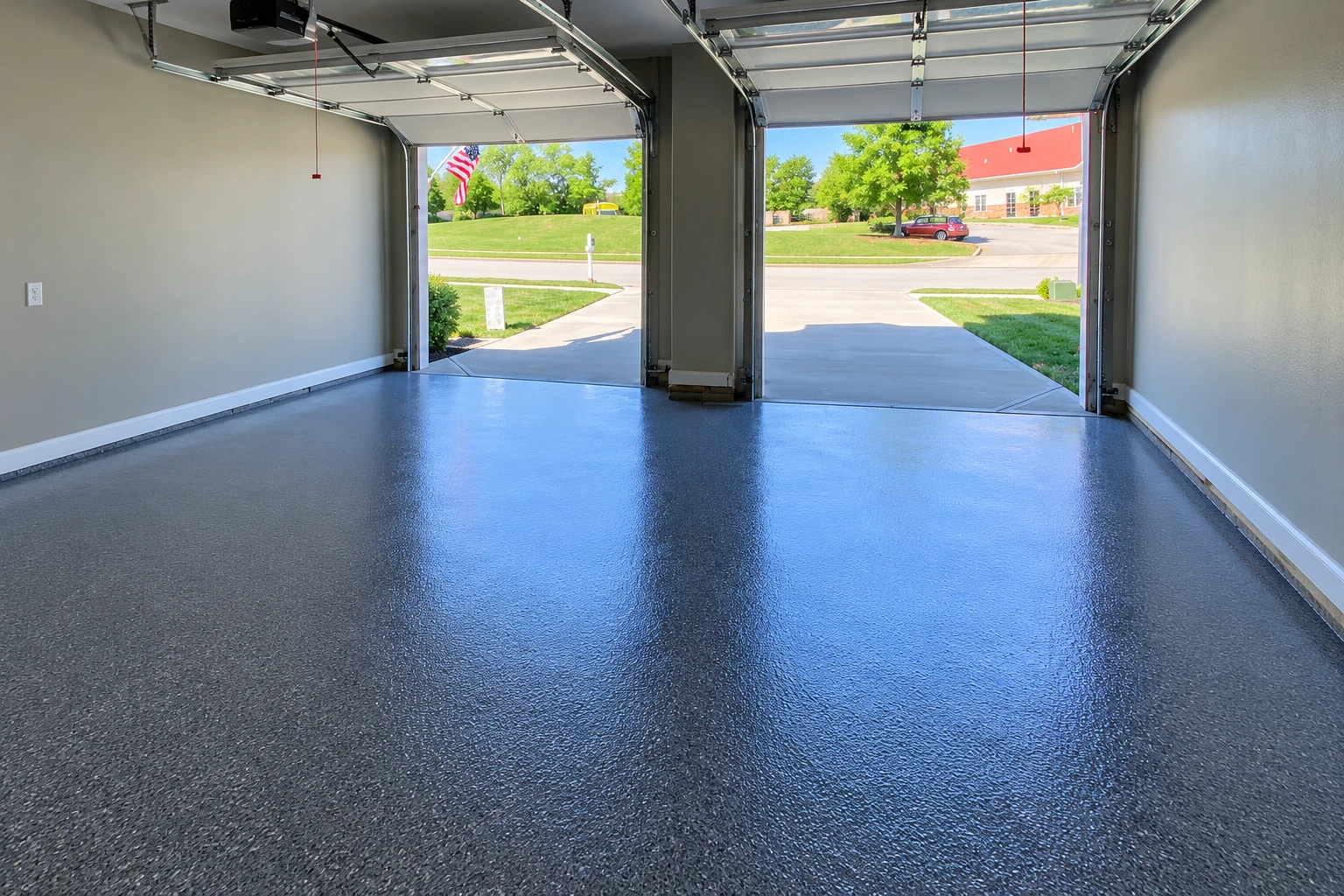
When oil spots, tire marks or a peeling store-bought kit have the garage looking rough, we strip, grind and coat it so it sweeps clean and parks well.
A faster-curing coating that suits a garage you need back in use soon, though it gives the crew less working time, so we mix it in small batches.
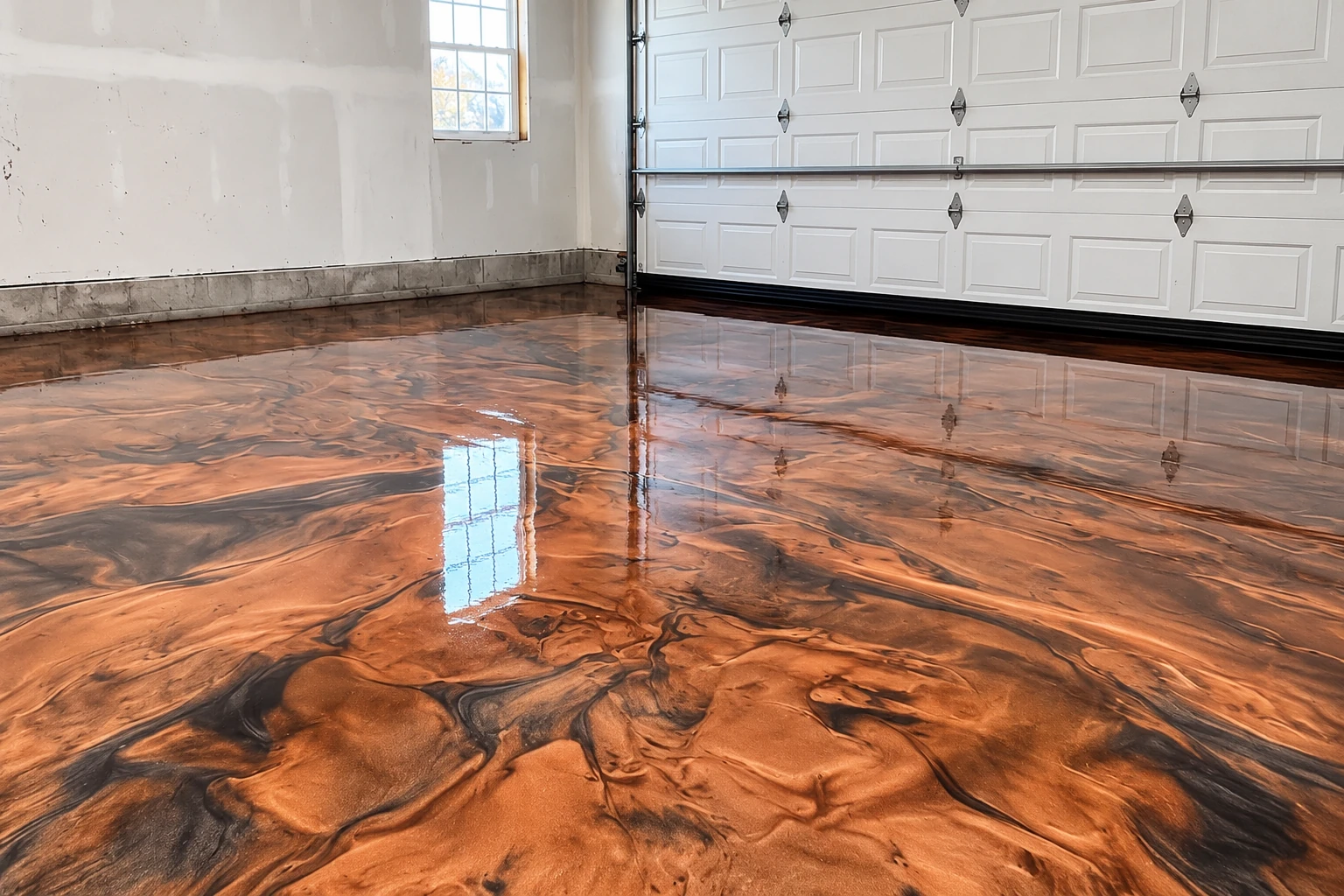
For a basement, game room or showroom where you want the floor itself to be the look, with swirled, pearly color that no two floors share.
Built for restaurant kitchens and food spaces where hot water washdowns and grease would wear down a regular epoxy, because urethane cement handles heat and moisture better.
If your slab is sound and you'd like a low-upkeep floor with no coating on top, we grind and polish the concrete itself to a shine.
A way to add color to an interior slab or patio when you like the look of concrete and want warm, mottled tones instead of a solid coat.
For lobbies, entryways and other spots with heavy foot traffic, where chips of stone or glass set into the floor make a hard, long-wearing surface.
Basements need a floor that handles damp better than carpet does, so we check the slab for moisture before we pick a coating that suits it.
The step that decides whether a floor lasts. We grind off sealers, glue and the weak, powdery skin on top of the slab so the new finish bonds to sound concrete.
For driveways, patios and garage floors you want protected from stains and water without a thick coating, a sealer is the lighter option and easy to redo later.
When a patio, walkway or garage slab is pitted, flaking or worn but still solid underneath, an overlay gives it a fresh surface without tearing it out.
Uneven or patched floors in a remodel can be brought flat with a self-leveling pour, so tile, wood or a coating goes down on an even base.
For a pool deck that's rough on bare feet, cracked or slick when wet, we repair it and add a textured coating that's kinder underfoot and easier to clean.
Before anything new goes down, we strip old epoxy, paint, sealer or flooring glue, because a new coat laid over a failing one fails right along with it.
Send the form and we'll reply within one business day to set up a time at your Waxahachie property. I come out myself to look at the floor, show you what's going on with the slab and go over the job with you. The estimate is free, and there's no obligation.
(972) 903-8033For a house inside the city, permits come from the City of Waxahachie's Building and Community Services department. Ellis County keeps its courts and offices in Waxahachie too, but the permit question goes to the city. When a floor is part of a remodel or addition that needs a permit, the city's guide asks you to allow at least 10 working days for plan review, so that wait sits ahead of our crew on the calendar.
We check with that office while we plan your job and handle any permit the work calls for. I'd rather sort that out before the grinder comes off the trailer than stop halfway, the same way you'd find the right part before you tear a motor down. It also means you're not the one stuck on hold with the city.
The rest of the job runs the way it does in Red Oak and Ennis. Price moves with the size of the floor, how much prep the slab needs and which finish you choose. The schedule turns on that same prep and on how long the coating has to cure before you walk or park on it, and you'll get your own figures once I've seen the slab.
We've been in business since 2013, and before that I spent years on other people's crews. What we're best known for is slowing down to show you what's going on with your slab before you pick a finish, so you understand why we grind here, patch there and test for moisture before a drop of coating goes down.
When the work starts, our crew does it and I'm on the job with them, so the person who looked at your slab is the one watching the prep. We're licensed and fully insured, and the promise behind every floor is the same. Your satisfaction, guaranteed.
I'll also give you a straight answer about what a floor can and can't do, even when that means a sealer or a polish instead of a full coating. If you want to talk your floor through, call (972) 903-8033 or send us the form.
These are the floors we're called about most around Waxahachie, and what each one usually needs before a finish goes down. Most of it doesn't show in a photo, which is why I want to see the slab.
Plenty of garages here hold a truck, a workbench and years of oil drips. Oil soaks into concrete and pushes a coating off from underneath, so we degrease and grind until we're down to clean slab. Hot tires can lift a thin coating too, which is why we'd rather put down a system built for parking than a coat of floor paint.
A lot of slabs come to us with a sealer, paint or coating somebody put down years ago. We test a spot to see what's there and whether it's letting go, then strip it rather than coat over it. It takes longer, but laying a new floor over a failing one is like bolting a new part onto a cracked frame.
Shop and restaurant kitchen owners call us when a floor that takes spills, carts and daily cleaning has started to chip or peel. Those floors usually need a heavier system than a house does, and in a kitchen that often means urethane cement because it stands up to hot water and grease. We'll talk through when the space can close, since the floor needs time to cure before anyone works on it.
Outdoor slabs take furniture, pool water and bare feet, so the surface matters as much as the color. When a patio or pool deck is rough, pitted or slick, we patch cracks, grind it and put down a textured coating or overlay that's easier to walk on. If a crack keeps moving, I'll tell you up front that a coating won't hide it for long.
You'll get a real number once I've walked the floor, because the slab decides most of it. Grinding off old coatings, repairing cracks and dealing with oil or moisture add the most, and a full flake or metallic system costs more than a single color coat. Bigger floors cost more overall, but prep usually moves the price more than size does.
The city's residential Addition, Alteration, Remodel, Repair permit covers work on an existing home that changes its structure or layout, or adds square footage under the roof. Single-trade repairs like reroofing fall outside that permit type. Plans must include every item on the city's remodel permit guide checklist, or they won't be accepted for review.
We put that question to the city's Building and Community Services department while we plan your job, rather than guess. A floor coating on its own isn't one of the jobs the city's remodel permit describes, but that doesn't settle it either way. If your work does call for a permit, we handle it so you don't have to.
An addition of 500 square feet or more needs a sealed foundation design letter and a sealed foundation plan, each sealed by an engineer licensed by the State of Texas, plus an energy compliance report such as ResCheck. If you'd like the new slab coated, call me before it's poured so we can plan the floor around it.
No. The phone instructions on the city's Building Inspection page say an inspection can be requested only after all fees on the permit are paid, though those instructions are dated and worth confirming. Settle the fees early so an inspection doesn't hold up the floor work that comes after it.
Clear everything off the floor, including shelves and anything stored along the walls, so our crew can grind right up to the edges. Plan to park outside until the coating has cured, and tell us about any leaks or spots that stay damp, since moisture under a coating is one of the main reasons floors let go.
Most of the time goes to prep and to the coating's cure, plus the city's plan review if the floor is part of a permitted remodel. A slab that needs old coatings stripped or cracks repaired takes longer than a clean one. Once I've seen your floor, I can tell you what your job needs and how we'd schedule it.
If a new floor is part of an addition or remodel, a call to (972) 903-8033 or a quick form now lets us look at the slab and plan the floor before your plans go to the city.